
Salt Lake Temple Stories: Groundbreaking Ceremony of The Salt Lake City Temple


To watch on Youtube click here:https://youtu.be/wC7mANy9W8w
To listen on Spotify click here: https://open.spotify.com/episode/2y5wA1oHKBhBNVn7IDH4us?si=t9yc6S_eR6iZlc1nMwsGEg
The Latter-day Saints arrived in the Salt Lake Valley in July of 1847, and worked and plan to build the Salt Lake Temple from the very beginning.
On the 26th of July Brigham resumed his exploration of the are. He took Heber C. Kimball, Willard Richards, Orson Pratt, George A. Smith, Amasa Lyman, Ezra T. Benson, Thomas Bullock, and Wilford Woordruff to analyze the area. They walked "north of the camp about five miles and climbed to a hilltop-the very place Brigham had seen in a vision back in Nauvoo. This they saw, was a "proper place to raise an ensign to the nations." From the vantage point of Ensign Peak they surveyed the valley with a telescope. They saw now "in a new holy land, with its . . . Dead Sea, its River Jordan, Mount of Olives and Galilee Lake." They had their own Jerusalem to build.
They decended from the hilltop and eventually returned to the camp. Later that day, about five in the evening, Brigham was walking with Wilford, going around the grounds near the camp, when they reached a point between the two primary creeks that ran through the are. There, Brigham stopped. The senior Apostle raised his cane and stamped it into the dry, hard dirt of the valley floor.
"Here" he said "will be the temple of our God."
At this point it had been three years since the Prophet Joseph Smith had died. Brigham and the Twelve had worked to find safety for the Latter-day Saints. Now in the Salt Lake Valley they would be safe from the mobs that hounded and abused the Saints and the government who would not protect them from their abusers. Now they only faced native tribes, wild animals and foul weather, all minor compared to what they had just experienced.
No matter how far the city grew in each direction, the Temple to God would be the literal and spiritual center of it all. Wilford Woodruff recalled that he had scrounged up a nearby stick and used a rock to hammer it down into the divot where the senior Apostle had plated his cane.
Brigham, and the Twelve returned to the Temple site two days later and decided that the "Temple Block" should cover 40 acres, this would later be reduced to 10 acres. The leaders gathered for a sustaining vote on whether to remain in the valley or look for another location, perhaps one that might offer better conditions for farming. They all voted no, and all desired to stay in the Salt Lake Valley.
Even though the Temple was one of the very first orders of buisiness when settling the in the Salt Lake Valley, there was much to be done before they could start the temple. The Saints needed to care for their immediate needs with food and housing and those two things took years.
The first spade of dirt was turned on February 14, 1853. Six years after the Latter-day Saints had first entered the Salt Lake Valley. It was a cold day for the groundbreaking ceremony , there had been a sharp frost several nights before the event, and there was snow on the ground. A large group of Saints assembled at 10:00 in the morning and watched as Truman Angel and Jesse W. Fox conducted a last minute hour long survey of the site. By the time the two men had finished "several thousand" people had gathered around the "hollow square".
Brigham Young climbed up to a buggy where he could be seen and heard, and addressed the crowd.
"If the congregation will give me their attention, I will detain them but a short time. Suffice it to say, to this congregation, that we shall attempt to build a temple to the name of our God. This has been attempted several times, but we have never yet had the privilege of completing and enjoying one."
The Latter-day Saints had only been able to use the Kirtland Temple for 21 months before the Prophet Joseph Smith was run out of town, but the Saints had needed 32 months to build the Kirtland Temple. Nauvoo was even worse, they had decided use parts of the temple during its construction, but only had four months to enjoy the final product before being run from the State. The Latter-day Saints had worked on the Nauvoo Temple for 5 years.
The Prophet Brigham Young seemed to be preparing the Latter-day Saints for the importance of this next chapter for the Saints saying:
"It is for us to do those things which the Lord requires at our hands, and leave the results with Him. It is for us to labor with a cheerful good will; and if we build a temple that is worth a million of money, and it requires all of our time and means, we should leave it with cheerful hearts, if the Lord in His providence tells us so to do. If the Lord permits our enemies to drive us from it, why we should abandon it with as much cheerfulness of heart as we ever enjoy a blessing. It is no matter to us what the Lord does, or how He is for His people to obey. We should be as cheerful in building this temple, if we knew beforehand that we should never enter into it when it was finished, as we would though we knew we were to live here a thousand years to enjoy it."
These words were not very reassuring
"The Lord wished us to gather in this place, He wished us to cultivate the earth, and make these valleys like the Garden of Eden, and make all the improvements in our power, and build a temple as soon as circumstances would permit."
"Let us revert for a moment to the past, to the years we have spent in toil and labor, tough very agreeable. Seven years ago to-morrow. . .I crossed the Mississippi river with my brethren, for this place, not knowing, at the time, whither we were going, but firmly believing that the Lord had in reserve for us a good place in the mountains and that He would lead us directly to it. It is but seven years since we left Nauvoo, and we are now ready to build another temple. I look back on our labors with pleasure.
Many of the members at the meeting that day had been baptized later than the events Brigham mentioned. Brigham promised that they too would see their share of trials saying:
"Here are hundreds and thousands of people that have not had the privileges that some of us have had. Do you ask, what privileges? Why, of running the gauntlet, of passing through the narrows. They have not had the privilege of being robbed and plundered of their poverty, of being in the midst of mobs and death, as many of us have. Only be faithful, brethren and sisters, and I promise that you shall have all such privileges as shall be for your good."
This next part, could have been to interject some humor into the talk saying:
"You need not be discouraged or mourn because you were not in Jackson County persecutions, or were not driven from Ohio, Missouri, and Illinois, and stripped, robbed, and plundered of all your property. Do not mourn and feel bad, because you were not in Nauvoo; have no fears, for if the word of the Lord is true, you shall yet be tried in all things, so rejoice and pray without ceasing, and in everything give thanks, even if it is in the spoiling of your goods for it is the hand of God that leads us, and will continue so to do."
The Latter-day Saints did not know at the time how difficult the next years would be and this message from the Prophet Brigham Young may have been the most prophetic messages he ever gave in public.
After Brigham was done speaking, Heber C. Kimball got up and spoke saying:
"The ground for the Temple was consecrated to the MOST High God; to be a Holy Place; where no unclean thing should ever approach; calling upon his Heavenly Father to protect it from every thing that was evil; and that he would bless the Architect, the Superintendent, the Foreman and all the laborers on the Temple, with wisdom, and understanding and knowledge, and perseverance in the midst of all difficulties, and their wives and children. . . that they might be faithful to the end and receive their blessings in the Temple; and that the angels of heaven might descend and visit them in that house, and dwell therein, and that God himself might meet his servants these, and administer to them."
After Heber spoke the leaders of both Church and city walked to the southwest corner, the traditional location during those times for the cornerstone of any major building. Breaking that ceremonial first piece of ground proved difficult. The frost and the cold of the last couple days had frozen the ground and the ground refused to break apart. Heber started into it with a pickaxe, followed by the Quorum of the Twelve.
They finally got enough dirt out and dismissed the assembly. Some members "rushed to the hole to get a chance to throw a little dirt out," but most went back to their homes.
Brigham wanted land ready to lay the cornerstone by conference that same year. This would only give the Saints forty-three days to get the work done, excluding the Sabbath.
References:
"40 Years, the Saga of building the Salt Lake Temple" p 19-20, 68-71
Related Posts
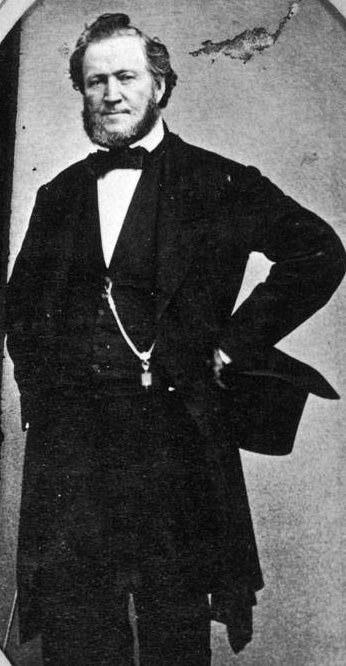
Salt Lake Temple Stories: 10 Years of Peace Prediction, Then, The Utah War
October 13, 2026
To watch on Youtube click here: https://youtu.be/R-16JqaTyTA To listen on Spotify click here:...

Pres. Nelsons Vision of Two Little Girls "We're Not Sealed to Anyone"
September 30, 2026
To watch on Youtube click here: https://youtu.be/BZjuOsGWHVI To listen on Spotify click here:...

The Boy in the Grease Pit
September 21, 2026
To watch on Youtube click here:https://youtu.be/DsnWiXrgwoE To listen on Spotify click here:...
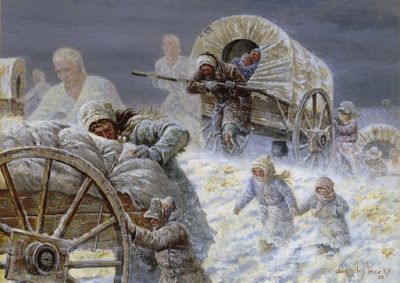
The Pan Filled With Food
September 21, 2026
Art by: Clark Price To watch on Youtube click here: https://youtu.be/EvyfKZ1vbhY To listen on Spotify click here:...
Russell M. Nelson Inspired Heart Surgery on St. George Patriarch
September 15, 2026
To watch on Youtube click here: https://youtu.be/HvhMi1TxjgY To listen on Spotify click here:...

The Women Who Helped Save the Book of Commandments
September 2, 2026
The horrendous persecution heaped upon the Latter-day Saints was once common knowledge but many today downplay the persecution. Some say the...
Joseph Smith Family Search Memories
July 14, 2026
There are many inspiring stories about the Prophet Joseph Smith. He was sent by a loving Father in Heaven to teach His children on Earth. There are...

The Other Eminent Men of Wilford Woodruff
June 5, 2026
Artwork credit: Vision of Wilford Woodruff, by Ken Corbett To watch on Youtube click here: https://youtu.be/vMDMss6lGrQ To listen on Spotify click...

Salt Lake Temple Stories: Cornerstone Ceremony of the Salt Lake City Temple
May 23, 2026
To watch on Youtube click here: https://youtu.be/QE6ldwnyGJU To listen on Spotify click here:...
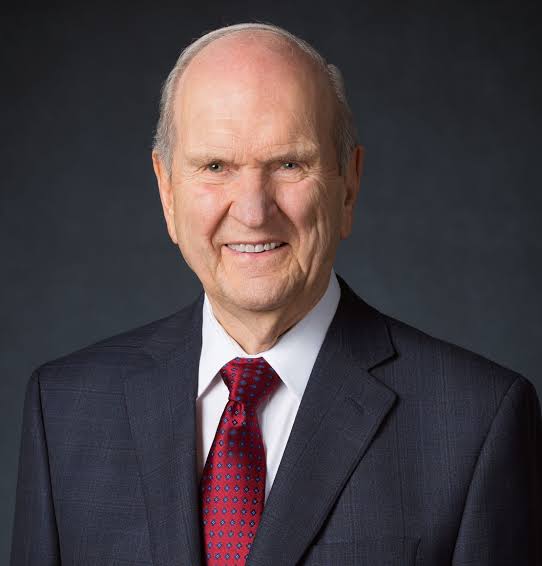
Who's Looking for Me? President Nelsons Story
May 18, 2026
To listen on Spotify click here: https://open.spotify.com/episode/2XnAptPeygDlV02X1byiU9?si=bz8pm2oYR5qo3x_Mm31RSQ To watch on Youtube click here:...